sales@naturalin.com
 +86(731)84430651








How is Centella Asiatica Extract Used in Personal Care Products?
Author : Naturalin Date : Click : times
For millennia, Centella asiatica—also known as gotu kola, tiger grass, or pennywort—has been a cornerstone of Asian traditional medicine, valued for its healing and soothing properties. In recent decades, it has become a staple in modern personal care, used in serums, moisturizers, and hair products. Derived from the Centella asiatica plant’s leaves and stems, this extract is rich in bioactive compounds that support skin and scalp health. Let’s explore its science, uses, and formulation key points.
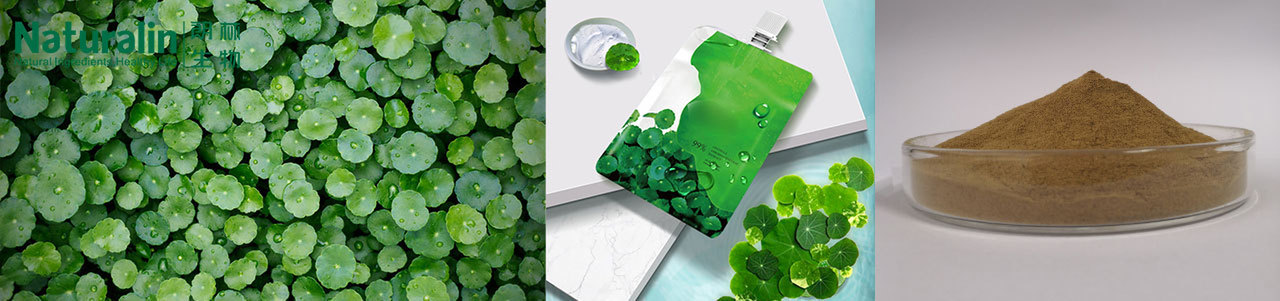
The Science Behind Centella Asiatica Extract’s Appeal
Centella asiatica extract’s benefits come from four key bioactive triterpenoids: asiaticoside, madecassic acid, asiatic acid, and madecassoside. These compounds work together to deliver multiple benefits.
Asiaticoside and madecassoside strengthen the skin’s barrier by boosting collagen and fibronectin production, locking in moisture. Madecassic acid and asiatic acid offer anti-inflammatory and antioxidant effects, calming irritation and fighting free radicals. It also contains nourishing amino acids, flavonoids, and vitamins, making it gentle for sensitive skin when properly formulated.
Common Uses in Personal Care Products
Centella asiatica extract addresses various skin and scalp concerns. Below are its main applications by product category.
1. Facial Skincare: Sensitive Skin’s Ally
Its calming, barrier-strengthening properties make it ideal for sensitive, irritated, or post-procedure skin, as well as anti-aging products:
Serums and Essences: Lightweight and fast-absorbing, they use 1-5% Centella extract (up to 10% for targeted repair) to boost collagen, soothe redness, and repair the skin barrier—ideal for rosacea, eczema, or post-acne redness.
Moisturizers and Creams: It complements hyaluronic acid and ceramides to reinforce the skin barrier, reducing dryness. Found in gentle day/night creams and eye creams, it soothes irritation and eases under-eye puffiness.
Toners and Mists: They balance skin pH, soothe post-cleansing irritation, and provide light hydration—great for oily/combination sensitive skin.
Cleansers: Gentle non-foaming/creamy cleansers add Centella to soothe skin while cleansing, suitable for sensitive, acne-prone, or post-procedure skin.
Masks: Sheet, gel, and overnight masks deliver concentrated calming and repairing benefits, with gel masks ideal for sensitive skin.
2. Body Care: Soothing Large Areas
Its gentle repairing properties make it perfect for body care targeting dry, irritated skin:
Body Lotions and Butters: Soothes dry, rough skin (elbows, knees, hands), strengthens the skin barrier, and relieves irritation from harsh weather or frequent hand washing.
Body Washes: Cleans gently without stripping natural oils, soothing dry, itchy skin—safe for eczema or sensitive skin.
After-Sun and Post-Procedure Products: Calms sun/ treatment-induced redness and irritation, accelerating skin recovery and reducing peeling.
3. Hair Care: Nourishing Scalp and Strands
It also supports scalp and hair health, especially for sensitive scalps or damaged hair:
Shampoos and Conditioners: Shampoos soothe sensitive scalps and reduce dandruff; conditioners nourish dry hair, reducing breakage and adding shine.
Scalp Treatments: Targeted serums/toners calm persistent irritation and flakiness, supporting a healthy scalp environment.
Hair Masks and Oils: Repairs dry, damaged hair, strengthens strands, and restores shine—ideal for chemically/heat-damaged hair.
Formulation Considerations
To maintain efficacy, formulators protect triterpenoids (prone to light/heat/oxygen degradation) with opaque packaging and antioxidants (e.g., vitamin E). It performs best at pH 4.5-6.5; alkaline formulas reduce efficacy.
Concentrations range from 1-5% for daily use, 5-10% for targeted repair; over 10% may irritate extremely sensitive skin.
Is It Right for Everyone?
Generally safe for all skin/hair types (including sensitive, acne-prone skin) when properly formulated, as confirmed by CIR and FDA. It is non-comedogenic.
Those allergic to Centella or related plants (e.g., parsley) should patch-test. Pregnant/breastfeeding individuals should consult a professional before using high-concentration products.
Conclusion
About Naturalin
We attach great importance to the personalized application needs of customers, support the customization of various plant extract products, and provide customers with comprehensive natural ingredient application solutions, helping brands create high-quality natural personal care products that meet market demand.
References
1. Journal of Cosmetic Dermatology. (2021). Centella asiatica Extract: A Review of Its Skin Barrier Repair, Anti-Inflammatory, and Anti-Aging Properties.
2. Avicenna Journal of Phytomedicine. (2024). Triterpenoids from Centella asiatica: Mechanisms of Action in Skin Health and Cosmetic Applications.
3. Environmental Working Group (EWG). (2025). CENTELLA ASIATICA EXTRACT. EWG Skin Deep® Cosmetics Database.
4. Lee, J. H., & Kim, S. Y. (2022). Centella asiatica Extract for Sensitive Skin: A Clinical Evaluation. Journal of Dermatological Science, 106(3), 189-195.
5. Singh, R., & Mishra, A. K. (2023). Centella asiatica: A Potential Ingredient for Hair Health—A Review. International Journal of Cosmetic Science, 45(2), 156-168.
Label:
 Return list